Materials the city throws away
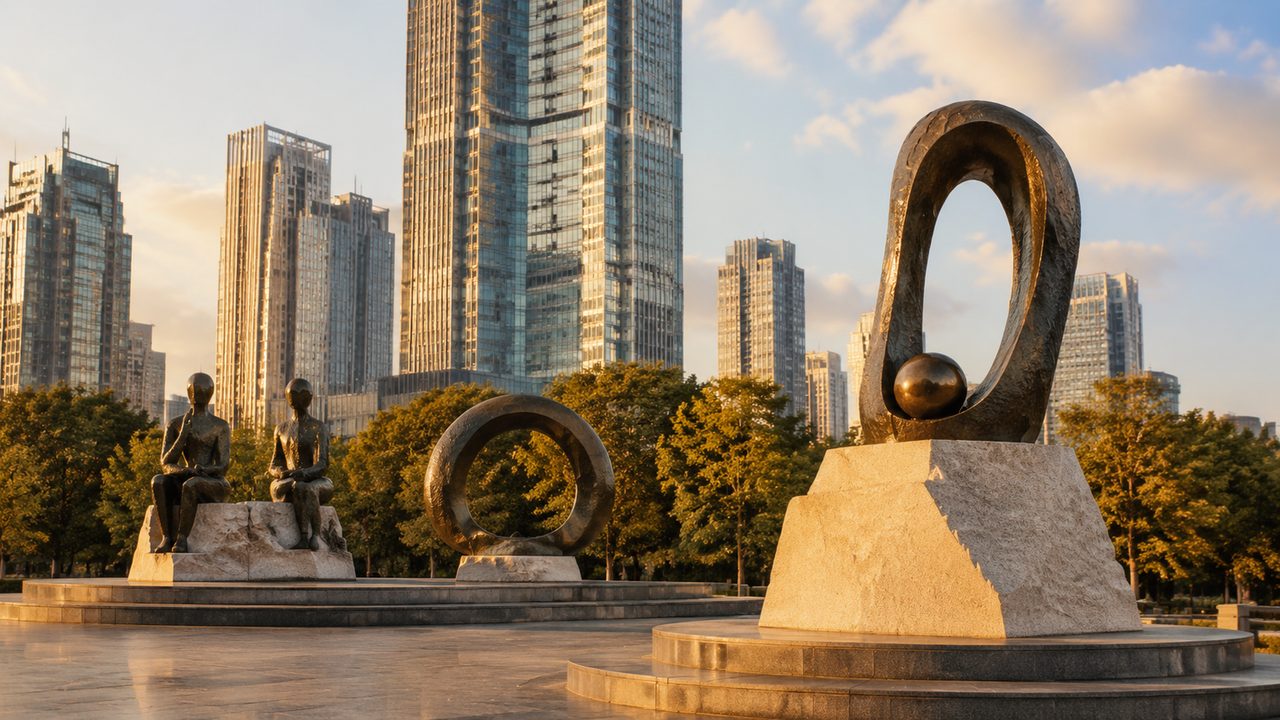
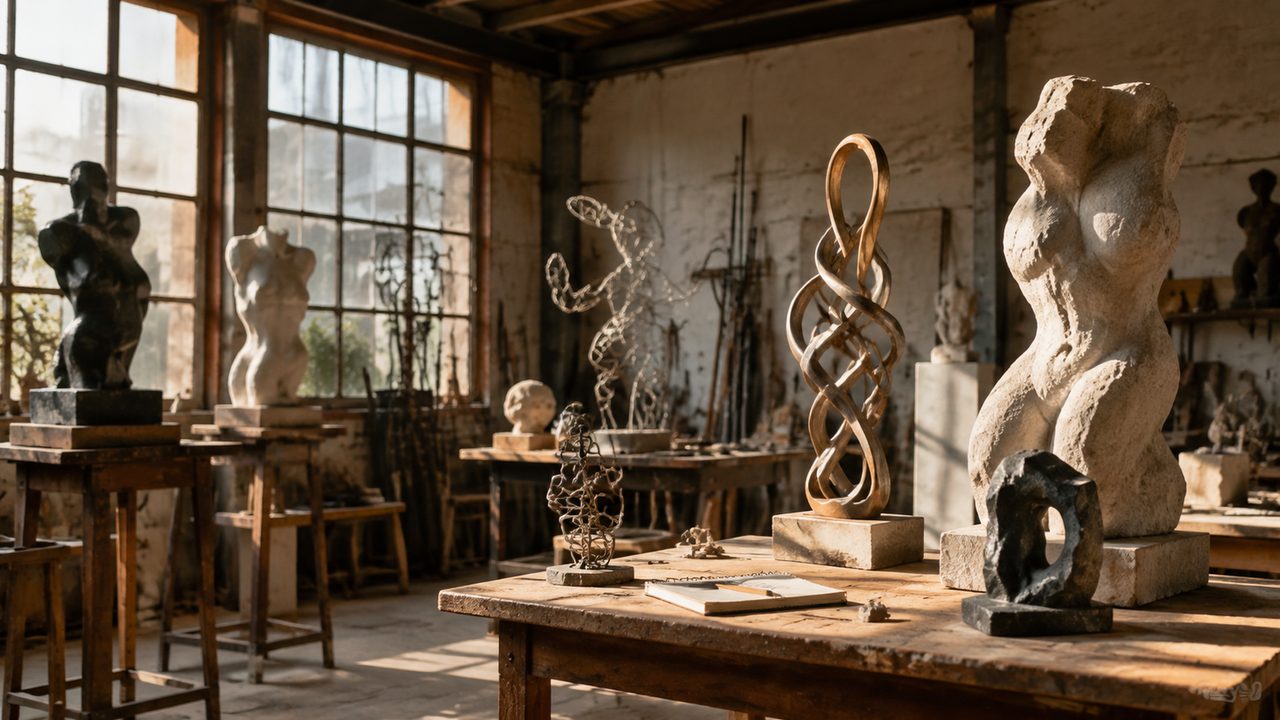
The six sculptors below work across Peckham, Hackney Wick, Walthamstow, Deptford, Tottenham and Leyton, and they share a method more than a style: each one treats London as a material store. The city's demolition sites, industrial leftovers and infrastructure all end up in their work, often in ways that are hard to spot until you are told.
We met the artists in their studios over the past year, or saw the work in group shows and open weekends. These notes are what the work looked like, and where to find it.
Jonah Adeyemi — Peckham
Adeyemi casts concrete in forms taken from the city's kerbs, bollards and pavement repairs, then stacks the casts into columns and friezes that read as abstract history of the street. His studio, in a railway arch off Rye Lane, is half construction site, half laboratory, and the work carries the grey of south London's pavements on purpose.
The casts are made from silicone moulds taken on-site, and the resulting surfaces keep the scars of the originals — the trowel marks, the cracks, the paint stripes. He has shown in three group shows this year, and the work travels well because the city it is made from travels with it.
Marta Ivanova — Hackney Wick
Ivanova welds sculpture from scrap pulled from the canal and the old factory yards of Hackney Wick — rusted metal, cable, chain and the occasional bicycle frame. Her pieces are assembled rather than carved, and they hold the working history of the neighbourhood in their surfaces: you can still see the rivets and the rust.
She works in a shared warehouse beside the canal, where the river's tide of debris supplies the studio. Her most recent series turned discarded fire extinguishers into a herd of improbable animals, which sold out at her last open-studio weekend.
Felix Okafor — Walthamstow
Okafor carves reclaimed timber from demolition sites in north-east London, working with the grain and the stains that previous lives left behind. His figures and reliefs are quiet, and the wood does much of the talking — the nail holes and paint lines of the source material become part of the finished piece.
His studio is above a shop in Walthamstow, and the work has been shown at the area's open-studio weekends and in a small group show at a Blackhorse Lane project space. The carving is slow, and the waiting list for his commission books is longer than his exhibition record suggests it should be.
Noor Haddad — Tottenham
Haddad makes plaster and latex casts of the city's incidental details — road markings, drain covers, the gaps where paving slabs have been lifted. The casts are presented as fragile, almost archaeological objects, turning the street's smallest accidents into something worth a museum case.
She works from a studio in a converted school in Tottenham, and the work has appeared in a series of public-realm commissions around north London. The pieces are small and exact, and they reward the close looking that sculpture rarely gets.
Rosa Lindqvist and Theo Marsh — Deptford and Leyton
Two more names to follow: Rosa Lindqvist, working in Deptford, makes latex casts of industrial interiors — factory corners, pipe runs, control panels — that hang like skins peeled from the buildings. Theo Marsh, in Leyton, builds small kinetic machines from salvaged motors and domestic appliances, turning the city's discarded technology into moving sculpture that whirs, clicks and occasionally laughs.
Both show in artist-run rooms and at the open-studio seasons of south and east London. Lindqvist's work is eerie and precise; Marsh's is funny and loud. Between the six artists here, the city's materials cover the full range of what sculpture can do.
Where to catch the work
The reliable calendar is the open-studio season: Deptford X, Walthamstow's open weekends, Hackney Wick's festivals and the south London studio circuits all open their doors at least once a year, and the work above is exactly the kind you will find there. The Royal Academy Summer Exhibition is another reliable place to look, since its open call regularly hangs this generation of sculpture.
The habit that pays is simply walking the studio areas on a weekend: the doors that are open tend to be open for a reason. Sculpture is the art form that needs to be seen in the round, and the studios are where the round is.