Trafalgar Square and the Fourth Plinth
London's most watched open-air sculpture is the Fourth Plinth in Trafalgar Square, the empty pedestal that has hosted a rotating commission since 1999. The works change every couple of years and have ranged from a huge blue cockerel to a ship in a bottle to a whipped-cream ice cream of absurd size — the brief is seriousness with a sense of humour, and the square's crowds are the audience.
The other three plinths hold the square's original statues, and the surrounding streets hold more: the bronze lions at the base of Nelson's Column, and the statue of Charles I on its traffic island at the south end, where every distance in London is measured from.
The South Bank: from Waterloo to the river
The walk along the South Bank from Waterloo to Tate Modern is a sculpture trail with a river attached. Henry Moore's bronzes stand on the terraces beside the National Theatre, their massive reclining figures at home against the concrete, and the Hayward Gallery's roof hosts sculptures that change with its exhibitions.
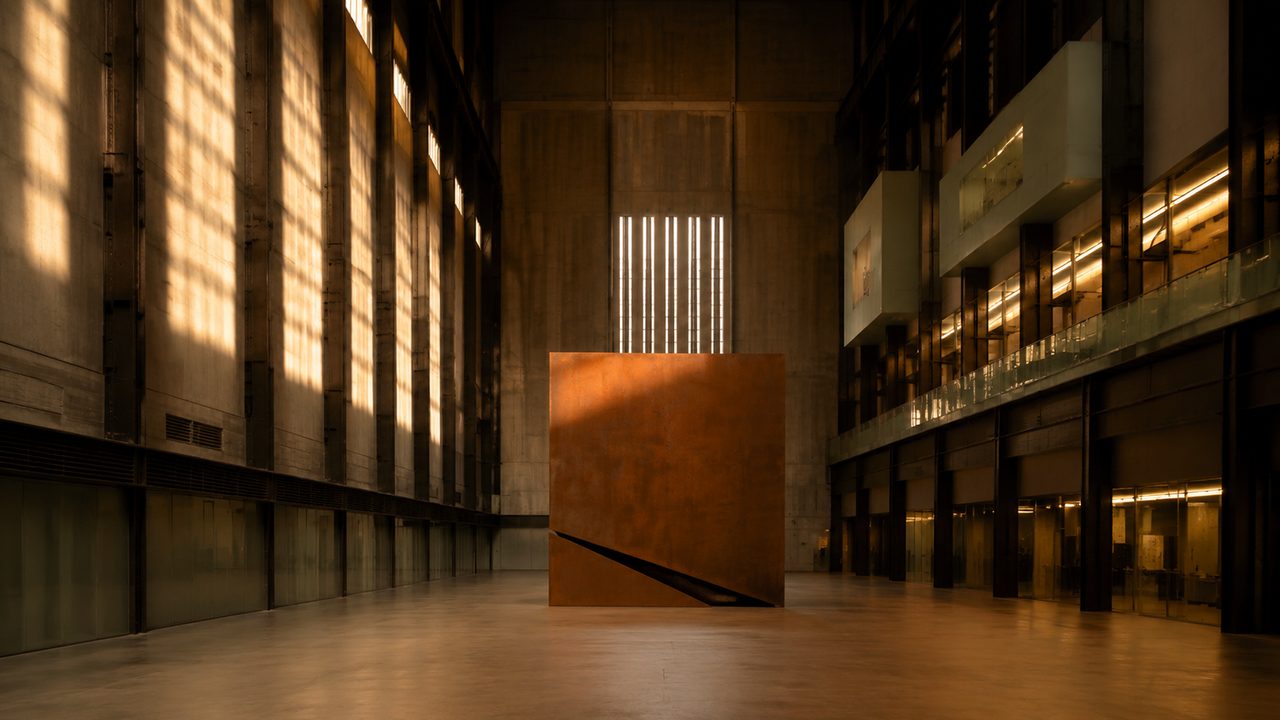
The route passes the London Eye, the Festival Pier and the skateboarders under the Queen Elizabeth Hall, and it ends at Tate Modern, whose Turbine Hall commissions have included some of the most ambitious open-air — or rather open-interior — sculpture in the world. The whole walk is free and takes about an hour at a stroll.
Moore and Hepworth in the City
The City of London holds two of the country's most important public works by its greatest sculptors. Barbara Hepworth's Meridian — a pierced bronze made in 1958–59 — stands on the plaza at State House, High Holborn, where it was commissioned for the new building and where it still holds its ground against the traffic.
Nearby, Henry Moore's early reliefs, West Wind, carved in 1928–29, run across the facade of 55 Broadway above St James's Park station, the young Moore's first public commission. Both are free to see from the pavement, and both repay a detour that most office workers never make.
Paternoster Square and the sculpture of the City
The rebuilt area around St Paul's carries a collection of public sculpture that tells the story of the City's reinvention. The most famous is Elisabeth Frink's Paternoster, a bronze shepherd and flock installed near the cathedral, its rough-surfaced figures a deliberate contrast to the polished office towers around them.
The City's plazas and churchyards hold more — abstract bronzes, fountains and the occasional surprise — and the best way to find them is to walk the pedestrian streets west of St Paul's without a map. The density of sculpture in the Square Mile is a reminder that the City commissions art the way it does everything else: seriously and at scale.
The Line: a free sculpture walk
The Line, which opened in 2015, is London's answer to the question of how to see public sculpture in a single afternoon: a walking route along the Lea Valley from the Queen Elizabeth Olympic Park to the Royal Docks, with more than twenty public artworks spread along its length. The works range from monumental pieces to site-specific commissions, and the whole route is free.
The Line is best done in sections — the northern stretch from Stratford to the park, or the southern stretch along the docks — and the DLR makes the return leg easy. It is the clearest demonstration that London's best sculpture is not behind glass: it is on the towpath, the plaza and the roundabout, waiting for someone to walk past.
Practical notes
All of the works above are free and visible from public ground, and none needs booking. The Fourth Plinth changes every couple of years, so check what is currently on the pedestal before you plan the view; the South Bank walk works in any weather but is best at golden hour, when the concrete and bronze both warm up.
The Line is a proper walk — wear shoes, not a gallery outfit, and allow two to three hours for a section. Between Trafalgar Square, the South Bank, the City and the Line, London offers the best free sculpture collection in Europe; the trick is knowing it is there.