Why this list, why now
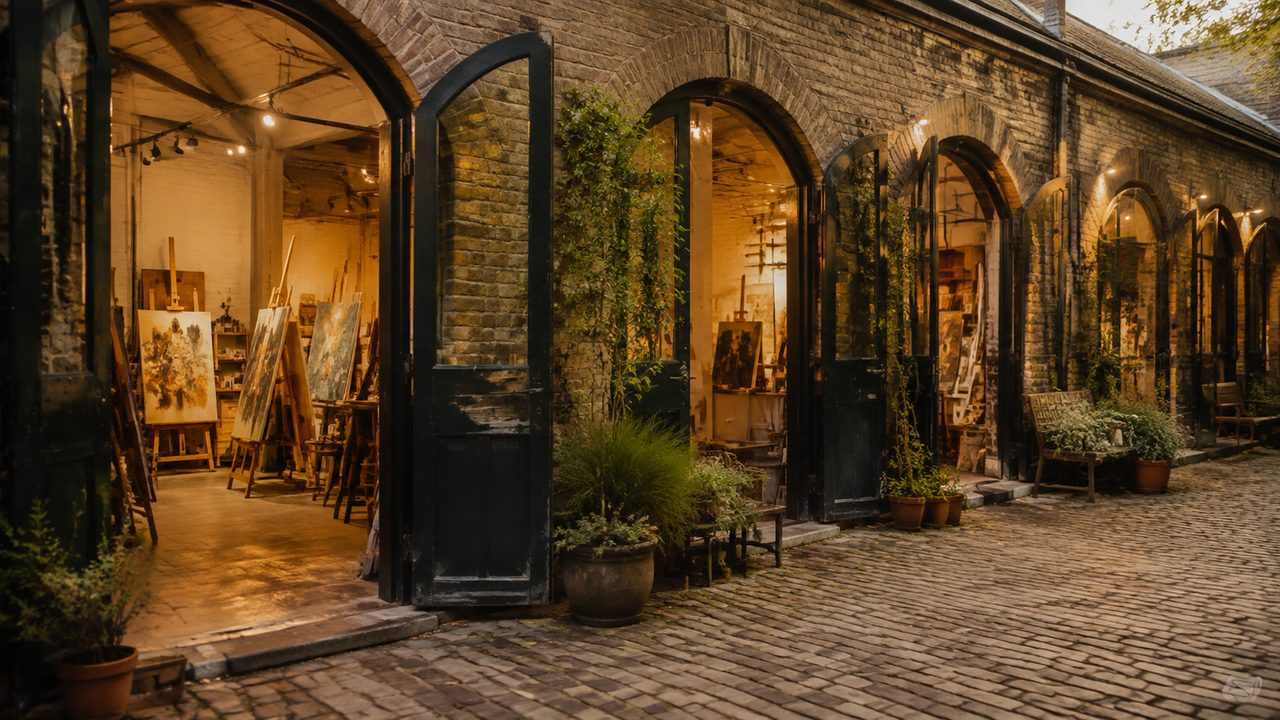
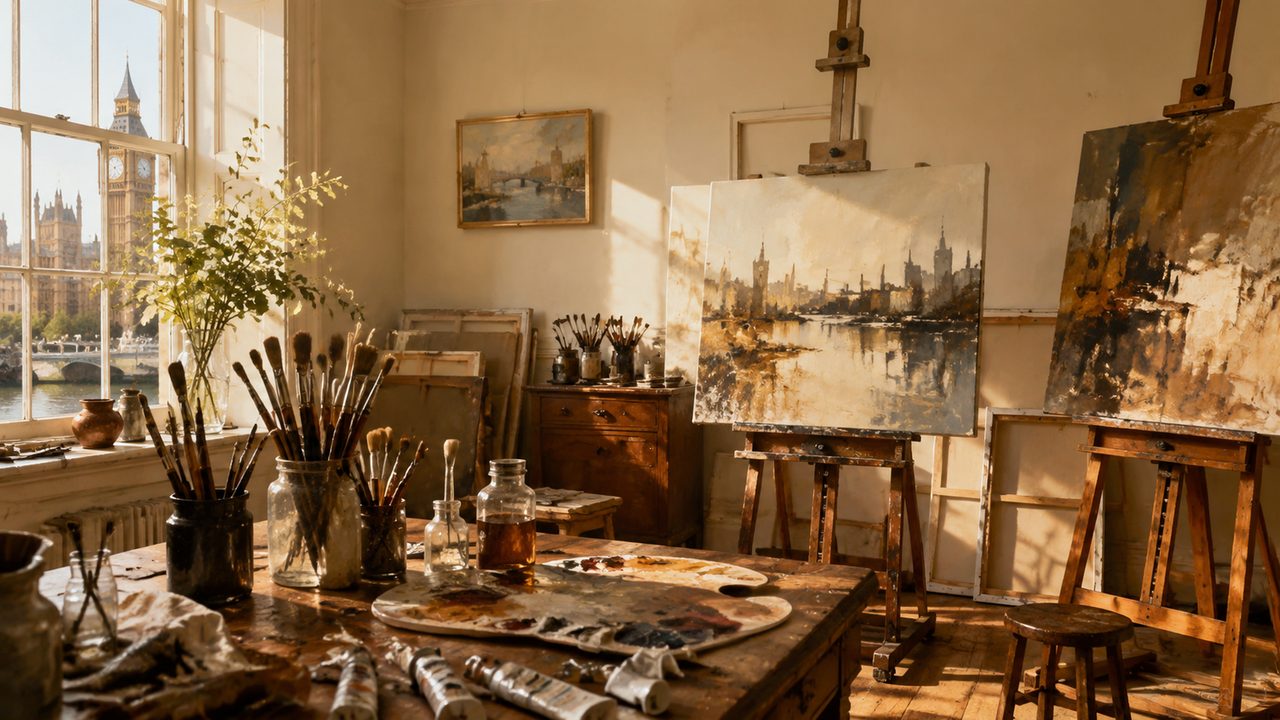
London's studio economy has been pushed to the edges of the city over the past decade, and the painting that survives tends to come from rooms above shops, railway arches and shared warehouses rather than central buildings. The five artists below are not the only good painters working in London — they are the ones whose work has been showing up, in small rooms and open studios, with a consistency that is hard to fake. We visited each studio, or met the work in a group show, and these notes are what stayed with us.
Maya Osei — Peckham
Osei paints figures large enough to fill a wall, in oil on linen, from a railway arch off Rye Lane. Her people are often mid-gesture — reaching, turning, about to speak — and she leaves the edges of her canvases raw, so the paint looks caught in the act of becoming. The compositions owe something to the group portraits of the seventeenth century, translated into contemporary south London. Her work has been in three group shows this year, and the last one sold out before the opening night.
Tomás Reyes — Hackney Wick
Reyes works in a shared warehouse beside the canal in Hackney Wick, and his paintings are the opposite of Osei's: hard-edged, geometric and built in layers of flat colour that look airbrushed until you stand close and see the brushwork. He calls them "urban grids," and they map the canal, the railway lines and the stadium lights around his studio. What looks abstract at first resolves, at distance, into the very specific landscape of east London after dark. His studio is open for the Hackney Wick art weekends twice a year.
Isla Brennan — Deptford
Brennan paints small, quietly obsessive interiors — a kitchen table, a stairwell, a window with rain on it — in muted colour from a top-floor room in Deptford. The paintings are rarely larger than a sheet of paper, which is precisely their point: they demand the close, still looking that small paintings reward. There is a Dutch seventeenth-century patience to her light. She shows rarely, and when she does it is usually in the artist-run spaces around New Cross and Deptford, where the rooms are small enough to suit the work.
Arun Chatterjee — Walthamstow
Chatterjee's canvases are night scenes of the city's transport — the Victoria line emerging above ground at dusk, the platforms of Walthamstow Central, buses crossing the Lea. He paints from photographs he takes on his commute, but the finished work is looser and more atmospheric than any image, with headlights and streetlight doing the colour work. He shares a studio above a shop near the high street, and his paintings have been turning up in curated sections of open-submission shows for two summers running.
Zoe Fielding — Lewisham
Fielding's practice sits between painting and textiles: she builds small canvases, then works into them with embroidery thread, beading and dyed fabric, so the surface rises off the flat plane. The subjects are domestic and personal — inherited objects, family photographs, the view from her Lewisham flat — and the stitching gives memory a physical weight. The work is hard to reproduce and even harder to forget. She exhibits with a collective of south-east London artists whose open-studio weekends in November are genuinely worth the train ride.
Where to catch them
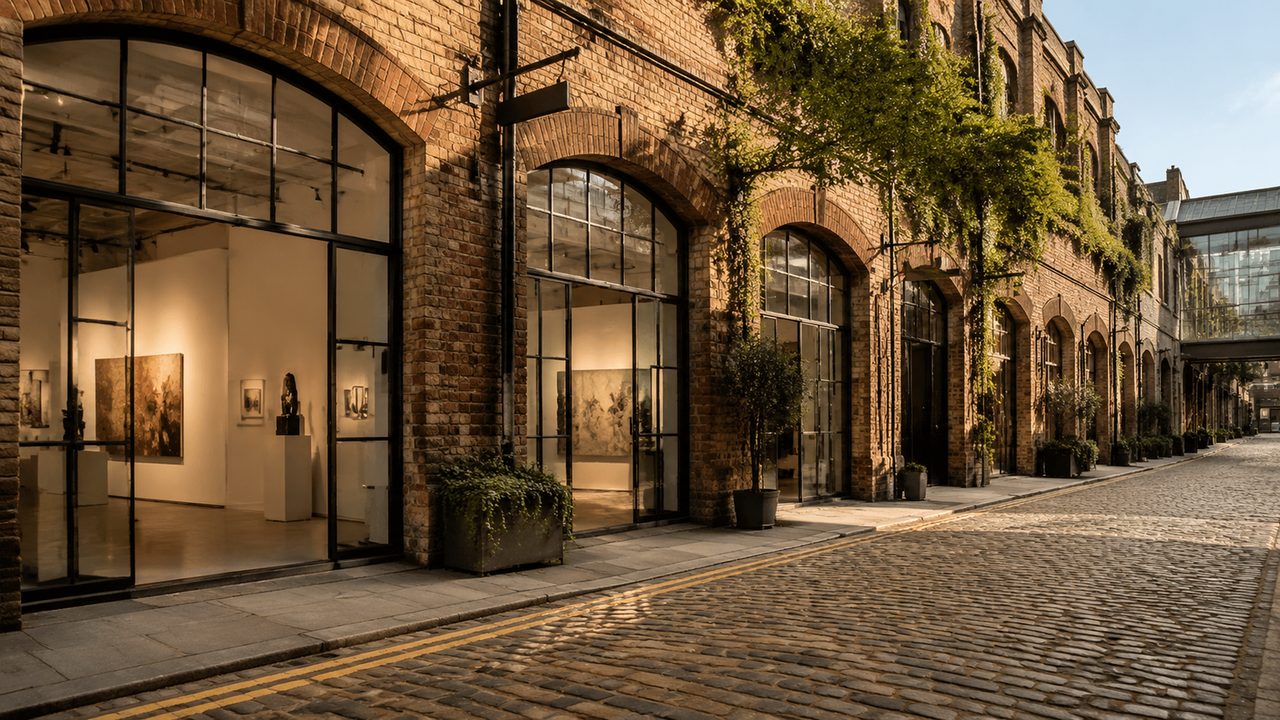
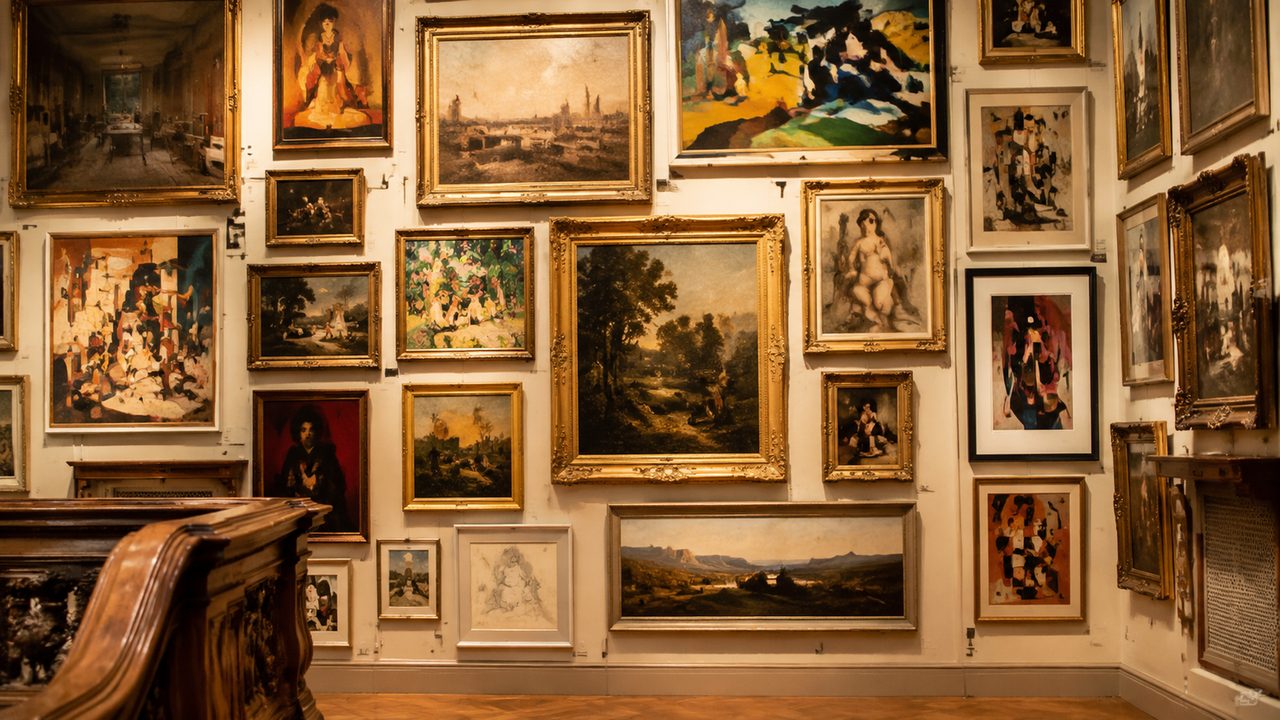
None of these artists has a solo gallery show booked for the season yet — that is what "emerging" means — but all of them surface regularly in open-submission shows, degree showcases and the open-studio weekends that run across the city from spring to autumn. The Summer Exhibition at the Royal Academy is a reliable first place to look, since its open call regularly hangs exactly this kind of work. Otherwise, follow the studios: Peckham, Hackney Wick, Deptford, Walthamstow and Lewisham all open their doors at least once a year, and seeing the work where it is made is still the best way to find the next name.