A house that was always a museum
Sir John Soane, architect of the Bank of England and Dulwich Picture Gallery, spent thirty years turning his home at 13 Lincoln's Inn Fields into a museum of his own obsessions: classical fragments, paintings, books, casts and the occasional Egyptian sarcophagus. He arranged it as a series of theatrical interiors, then left it to the nation in 1833 on condition that it stay exactly as he made it. It has.
The house is free to enter, though timed tickets are booked online with a small £1 booking fee. The rooms are tiny, the staircases steep and the lighting dim — this is not a gallery for the claustrophobic, and that is part of its magic.
The picture rooms and their hidden walls
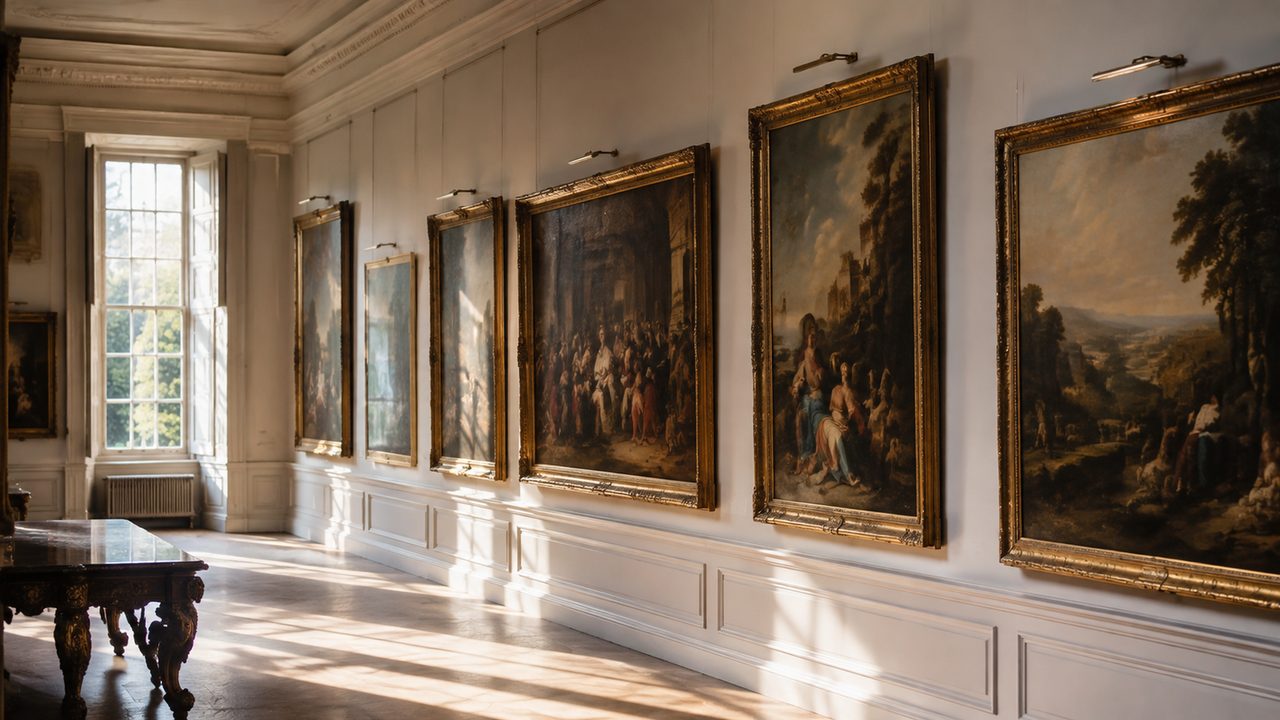
The picture rooms on the first floor are the house's centrepiece: hinged walls covered in paintings on both sides, folded against one another like pages in a book. When the attendants open the walls, the rooms double in size and a second layer of pictures appears. The effect is a slow-motion reveal no photograph can prepare you for.
The walls carry paintings by Canaletto, Turner and Piranesi, hung frame-to-frame in the dense manner of an eighteenth-century collector. Go when the house first opens, before the crowds arrive, and you can follow the attendants around and watch the walls swing.
Hogarth's moral sequences
Soane owned William Hogarth's two great moral series in full: A Rake's Progress, the eight scenes of a young man's ruin, and Marriage A-la-Mode, the six scenes of an arranged marriage collapsing. Both hang in the picture rooms, and they are the funniest and most brutal things in the house — satire that still lands after three centuries.
A Rake's Progress was the hit of its own century, and Hogarth sold the engravings in huge numbers. Seeing the paintings hung as Soane hung them, high on folding walls, you understand why the Victorians called him a moralist and why the pictures are really just very dark comedies.
The sarcophagus of Seti I
In the basement, in a vaulted chamber Soane called the Sepulchral Chamber, sits the alabaster sarcophagus of the pharaoh Seti I, discovered in 1817 in the Valley of the Kings. Soane bought it for £2,000 and held a three-day party to celebrate its arrival; the translucent stone glows when the room is lit in the evenings.
The sarcophagus is one of the great pieces of ancient Egyptian art outside Egypt, and it sits here, in a London basement, because a nineteenth-century architect decided it would look good in his house. The museum's winter evening openings — its Lates — are the best time to see it, when the room is lit the way Soane intended.
The dome, the breakfast room and the light
Soane's real material was light. The central well of the house is crowned with a lantern, and the breakfast room on the ground floor has a shallow dome of painted glass that throws a wash of colour across the room at midday. The walls of the breakfast room are lined with paintings that swing out on hinged panels — a domestic version of the picture rooms upstairs.
The monument yard at the back of the house, with its stacked architectural fragments and the tomb Soane designed for himself and his dog, completes the joke: the whole building is a self-designed afterlife, and Soane is its only permanent resident.
Practical notes
The museum is at 13 Lincoln's Inn Fields, a few minutes' walk from Holborn and Chancery Lane stations. It opens Wednesday to Sunday from 10:00 to 17:00, with evening openings through the winter, and entry is free with a timed ticket. Photography is allowed in most rooms, but the dim light will defeat your phone quickly.
The house is small — most visits take about an hour — and the basement and the picture rooms are the parts to protect. Combine it with a walk through Lincoln's Inn Fields itself, which is London's best hidden public garden.