Why the crowds form where they do
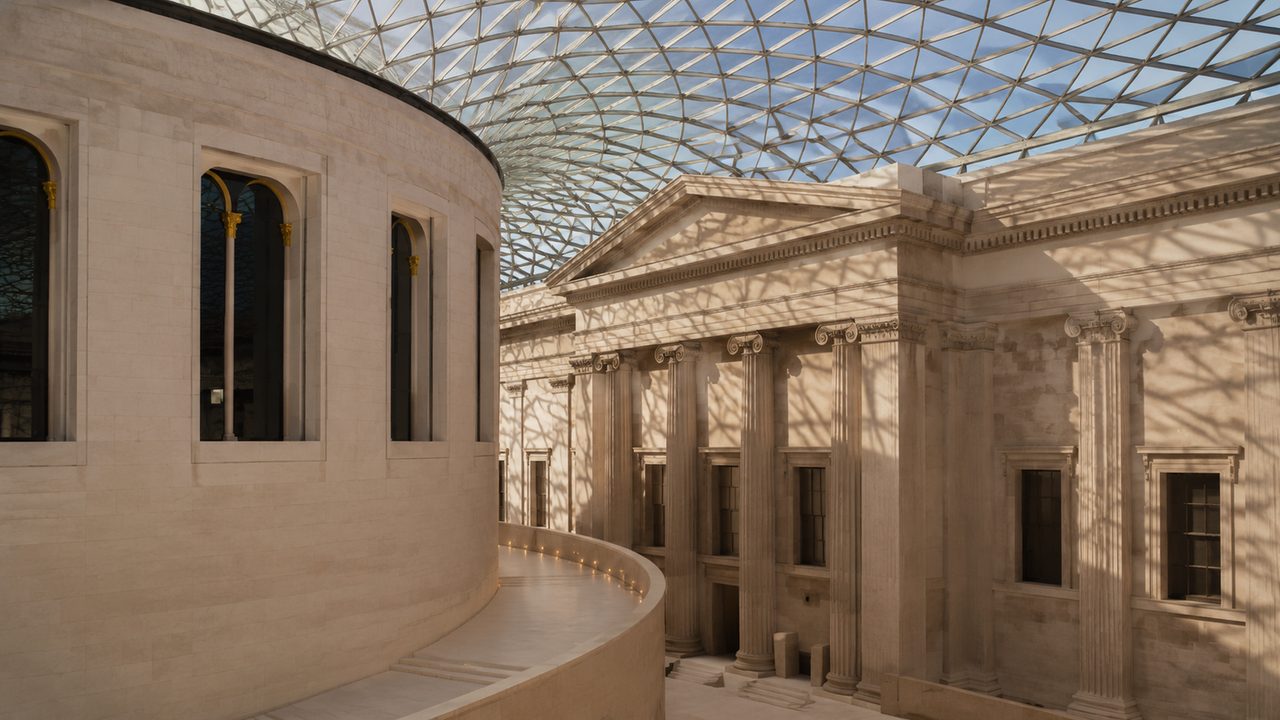
Nearly everyone enters the British Museum through the Great Russell Street portico, crosses the Great Court and turns right into Room 4, where the Rosetta Stone sits against the far wall. By 10:30 the queue of phone-holders around the case is three deep, and it stays that way until the guards start sweeping people toward the exit. The rest of the Egyptian collection, a couple of staircases up, is a different story: quieter, better lit and full of objects most visitors never reach.
The museum is free and open daily from 10:00 to 17:00, with Friday evenings running until 20:30. The first hour after opening and the last two hours of the day are the ones to protect. If you can only manage one rule, make it this: do the first floor before the ground floor.
Start upstairs, not in Room 4
Take the west stairs from the Great Court to the first floor and begin in Room 63, the long gallery of daily life in ancient Egypt. The cases run the length of the room with mummies, coffins and the tools of everyday existence — sandals, baskets, loaves of bread left for the dead — and because the tour groups funnel through Room 4 first, this room is often half empty.
From Room 63 walk through Rooms 62 and 61, where the animal mummies and the decorated coffins of priests and officials are displayed with their lids propped open. The pace is entirely different from the ground floor: you can stand close to the glass, read the labels and actually look.
The Rosetta Stone, handled properly
The Rosetta Stone is in Room 4 on the ground floor, and it is worth seeing — just not the way the crowd sees it. Go at opening time, or after 15:00 on a weekday, and approach the case from the left side of the room rather than joining the slow shuffle from the door. The stone is a fragment of a larger stele, carved in 196 BC with the same decree in three scripts; the Greek at the bottom is what let scholars read the hieroglyphs above.
Two minutes in front of the case is enough. The object is grey, battered and smaller than the crowds suggest, and the real thrill is the story in the label, not the stone itself.
The mummy rooms on your own terms
Return upstairs for the mummies in Room 63 at the far end — the naturally preserved bodies from Gebelein, buried in the desert sand around 3400 BC, which are more confronting than any wrapped coffin. The wrapped mummies and the gilded masks in the adjoining cases reward a slow pass, and by late afternoon you may have the room to yourself.
Room 62 holds the animal mummies — cats, ibises, crocodiles — which children love and adults pretend not to. They are a reminder that the Egyptian galleries are not one room but a quarter of the museum's collection, and most of it is upstairs.
The sculpture gallery at the end
Finish on the ground floor in Room 4 proper, where the colossal statues stand. The granite head of Ramesses II, the seated colossi and the paired lions spread the crowds across a huge space, so you can walk the far wall first and leave the Rosetta Stone case until you are already heading out.
The room is at its best after 15:00, when the school groups thin. Take the free paper plan from the desk if you want the room numbers, or simply follow the biggest crowds in reverse — the far end of Room 4 is usually the quietest part of the entire museum.
An exit that skips the bottleneck
At closing time the staff steer visitors toward the Montague Place exit on the north side of the building, which lets you out a short walk from Russell Square station. If you are leaving earlier, cut through the Enlightenment gallery on the ground floor — it runs along the back of the building and is almost always empty — and leave through the same north door.
The permanent galleries need no booking, there is a free cloakroom by the main entrance, and the Great Court cafe is the most reliable place for a coffee mid-route. Save the paid special exhibitions for a separate trip; the Egyptian collection alone is a full day's worth of looking.