The first gallery built for the purpose
Dulwich Picture Gallery opened in 1817 as the first purpose-built public art gallery in England, designed by Sir John Soane for the collection amassed by the dealer Noel Desenfans and the painter Sir Francis Bourgeois, who left it to Dulwich College. Before this, paintings lived in palaces, private houses and the occasional converted room; Dulwich invented the building type every museum since has copied.
The gallery still sits on its original site beside the college, and the arrangement Soane chose — a long run of rooms with a mausoleum at one end — survives intact. It is a quiet, brick-faced building in a south London suburb, and it works better than most of the buildings designed in its image.
Soane's lighting: daylight as a material
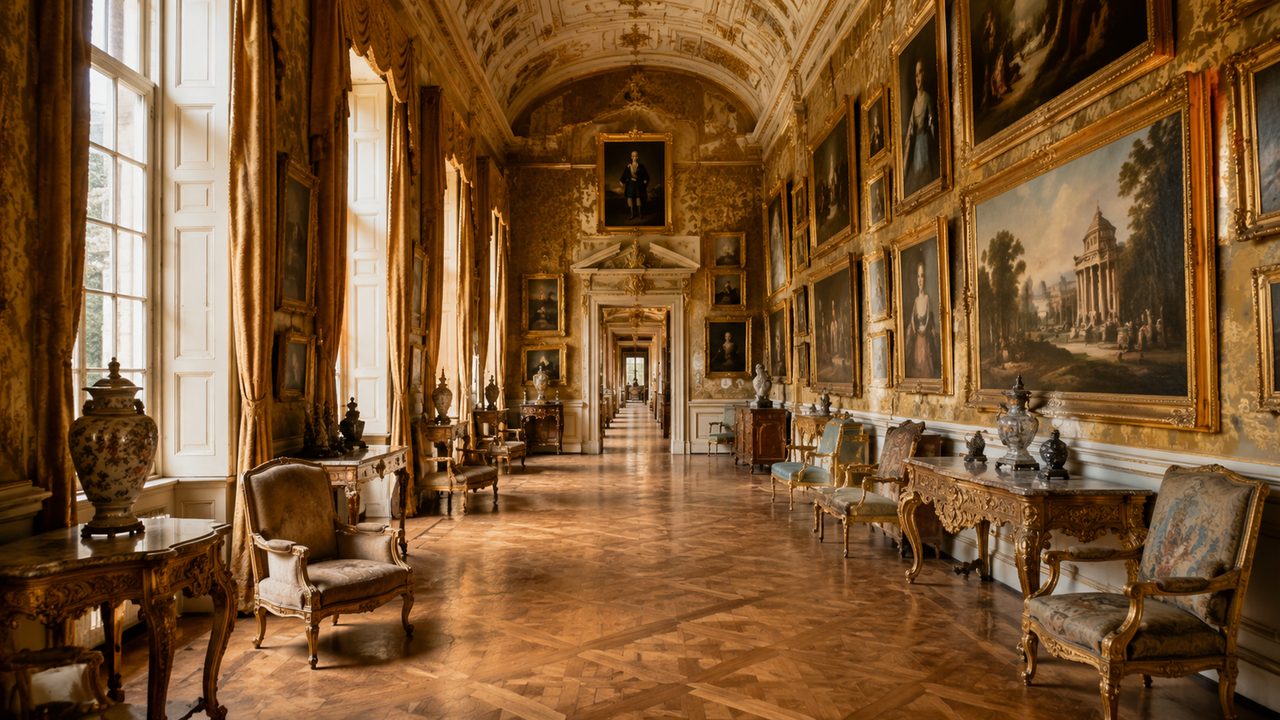
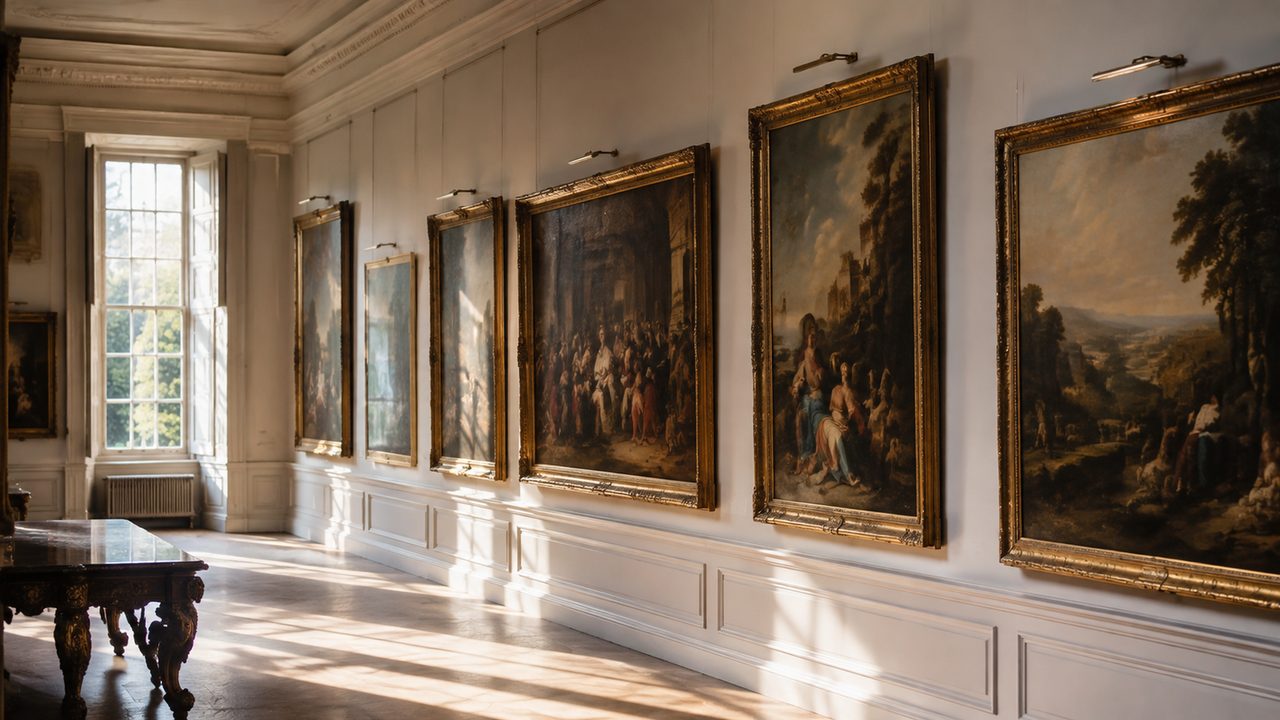
Soane's trick was the roof lantern: a line of glazed ridges running along the top of each room that drops daylight onto the walls without any glare on the glass. The rooms are low and long, with the paintings on the walls and daylight from above, and the effect is a calm, even light that makes the pictures look effortless.
The system is why the gallery still matters. Modern museums talk endlessly about lighting, and most of them get it wrong; Dulwich's two-hundred-year-old solution — let the light in from above and keep the walls quiet — remains the best answer anyone has found.
The Dutch rooms and the jewel at the window
The collection is strongest in the seventeenth and eighteenth centuries, with Rembrandt's Girl at a Window — a young woman leaning out, painted around 1645 — as its most famous picture. It hangs in a small room on the east side, and the plain wall and the daylight do what every museum hopes to achieve with its star work.
The Dutch and Flemish rooms also hold portraits by Rubens and a run of Italian and French pictures — Poussin, Claude, Murillo — that the college bought when such things were cheaper. The British rooms, with Gainsborough and Reynolds, show how the eighteenth-century taste for portraiture developed.
The mausoleum at the end of the building
The mausoleum at the east end is Soane's strangest room: a brick vault holding the tombs of Bourgeois and Desenfans, the two men whose collection made the gallery possible. Soane built it as part of the original commission, making Dulwich the only gallery in the country with its founders buried in the building.
The mausoleum is normally closed, but the gallery opens it for guided tours and special evenings, and the line of light that falls through its windows is worth seeing even from the doorway. It is the most literal version of Soane's lifelong theme: architecture as a machine for remembering.
The garden, the cafe and the college
The gallery opens onto a long garden that runs beside the building, with benches, lawns and a cafe in the former schoolroom — a rare spot where you can look at paintings and then sit among the trees. The college's grounds and the famous cricket pitch complete the setting, and the whole place feels like a country house that happens to be inside London.
The garden is at its best in the late afternoon, when the light drops and the building's brick glows. The gallery's exhibition programme — temporary shows in the side rooms — is strong, but the permanent collection and the garden are the reasons to make the trip.
Practical notes
Dulwich Picture Gallery is on Gallery Road, a ten-minute walk from West Dulwich or North Dulwich stations, or a short bus ride from Brixton. It opens Tuesday to Sunday from 10:00 to 17:00 and is closed on Mondays; admission is around £9 for adults, with free entry for under-18s and concessions.
The gallery is the easiest of London's great collections to see in a single visit — the permanent hang takes about ninety minutes — and the combination of Soane's building, the Rembrandt and the garden makes it one of the best-value days out in the city.