The clay revival
Ceramics has spent the past two decades moving out of the craft corner and into the contemporary art conversation, and London is one of the cities where the shift is most visible. Studio potters here make work that hangs in galleries as often as it sits on tables, and the city's community studios have turned throwing a pot from a school memory into a serious hobby and a serious career path.
The scene has two halves: the professional makers and the community studios where anyone can learn. Both are worth knowing, because the second feeds the first.
Turning Earth in Leyton
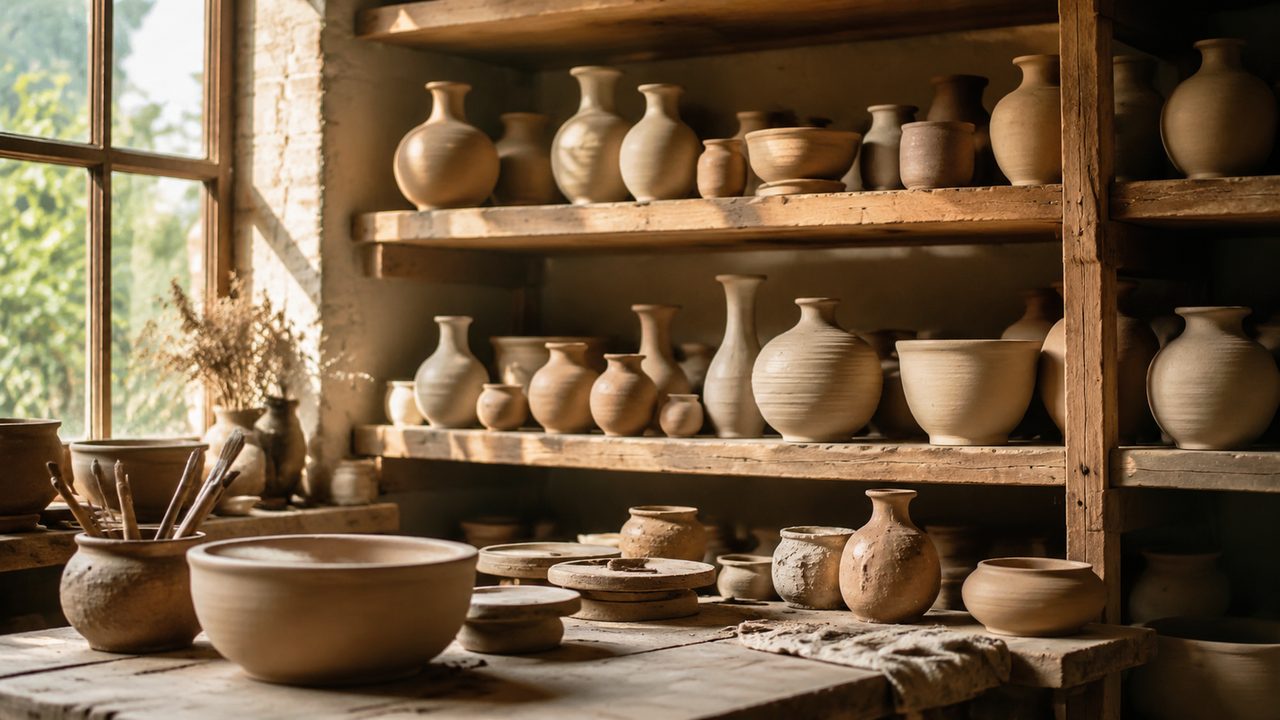
Turning Earth, on an industrial estate in Leyton, is the largest and best-organised community ceramics studio in London: a members' space with rows of wheels, kilns and glazing benches where hundreds of potters pay a monthly fee for shelf space and firing time. It runs courses at every level and holds regular open days where members' work goes on sale.
The membership model is the key to the city's ceramic revival — it makes the craft affordable in a city where studio rents are prohibitive. A session on the wheel costs far less than a gallery course, and the studio's members range from beginners to makers who sell their work through the shop.
The Kiln Rooms in Peckham
The Kiln Rooms, with studios in Peckham and elsewhere, run on a similar model with a more design-led flavour: evening classes, membership, and a particular strength in slip-casting and decorative techniques. The Peckham studio sits in the neighbourhood that has become the city's most productive makers' quarter, and its open evenings draw a steady stream of local buyers.
The studio's courses are the most popular in south London, and the waiting lists reflect it. If you want to try the craft rather than just look at it, the Kiln Rooms' taster sessions are the gentlest way in.
The Contemporary Ceramics Centre
For seeing the best of British studio pottery in one room, the Contemporary Ceramics Centre at 63 Great Russell Street is unbeatable: a gallery and shop run by the Craft Potters Association, directly opposite the British Museum. The shelves hold work by hundreds of British potters, from established names to first-time exhibitors, and the standard is uniformly high.
The centre is free to browse, and its staff will happily talk about the makers — which potter throws with what clay, whose glaze recipe is a family secret. It is the most civilised pairing in London with the British Museum across the road: five thousand years of human making, then the current generation.
Where the new work appears
The big calendar events are Ceramic Art London, the annual fair at Central Saint Martins that gathers the country's best studio potters, and Collect, the international fair for contemporary craft held at Somerset House in February. Both are ticketed but worth the entry, and both sell out of the best work within hours of opening.
Beyond the fairs, the community studios' own open days are where the next generation sells first — a bowl for £20 at a Leyton open day may be the same maker's £400 piece at a fair two years later. Following the studios is how you watch the market form.
Practical notes
Classes at the community studios run from about £40–70 for a single session, with discounts for blocks and membership for regulars; the Contemporary Ceramics Centre and the museums' ceramics rooms are free. The V&A's ceramics galleries — free, and among the largest in the world — are the essential complement to the studio scene.
The route that makes sense: browse the Contemporary Ceramics Centre, then cross the road for the British Museum's pots, then take a course at Turning Earth or the Kiln Rooms when you want to stop looking and start making.